How Google Search Works, Explained by a Trip to Nashville
By Craig Lawson, Founder & CEO of ClickReady Marketing. Craig has led SEO and Google Ads campaigns for service businesses since 2010 and heads one of the top 3% of Google Partner agencies nationwide.
On the Fourth of July, I was standing in the middle of Lower Broadway in Nashville. The police had closed the street. Tens of thousands of people were packed between the honky-tonks, every bar had a neon sign twenty feet tall, and somewhere behind me a band was playing loud enough to rattle the bank building.
That's when it hit me: I was standing inside a search results page.
I run a marketing agency, so maybe that's just what my brain does on vacation. But the more of the trip I replayed on the drive home, the more it held up. If you've ever wanted to understand how Google Search works, or how AI tools like ChatGPT and Gemini decide which business to recommend, Nashville explains it better than any diagram I've ever drawn. Here's the trip, photo by photo.
Broadway Is a Search Results Page
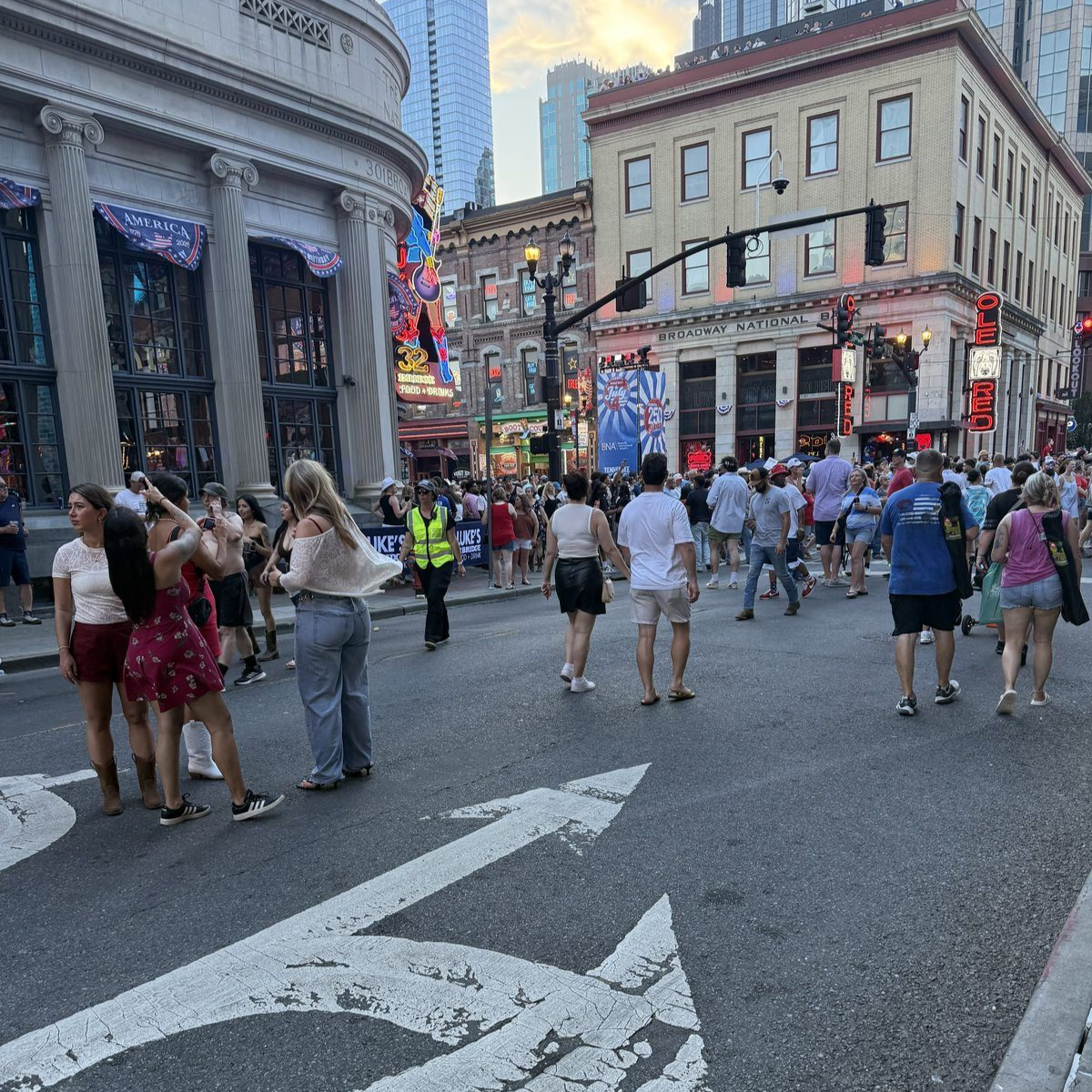
Every bar on Broadway wants the same thing: you, inside, ordering. So the signs get bigger, brighter, and higher. Guitars made of neon. Rooftop banners. A guy at the door telling you the band inside is the best one on the street. He says that at every door.
Page one of Google is Broadway. Ten businesses (plus ads at the top, which are the paid rooftop banners) all competing for a click, and the searcher decides in about three seconds using surface signals: the name, the title, the little snippet of text.
Here's the part most business owners miss. The Broadway National Bank building has its name carved in stone. It's been there for a century. That kind of permanence earns trust, and Google works the same way: an established site with years of history and a clean track record gets the benefit of the doubt. But carved letters alone don't make the bar underneath it any good. Age helps you get looked at. It doesn't make you the answer.
How Google Search Works: The Mall Map Version
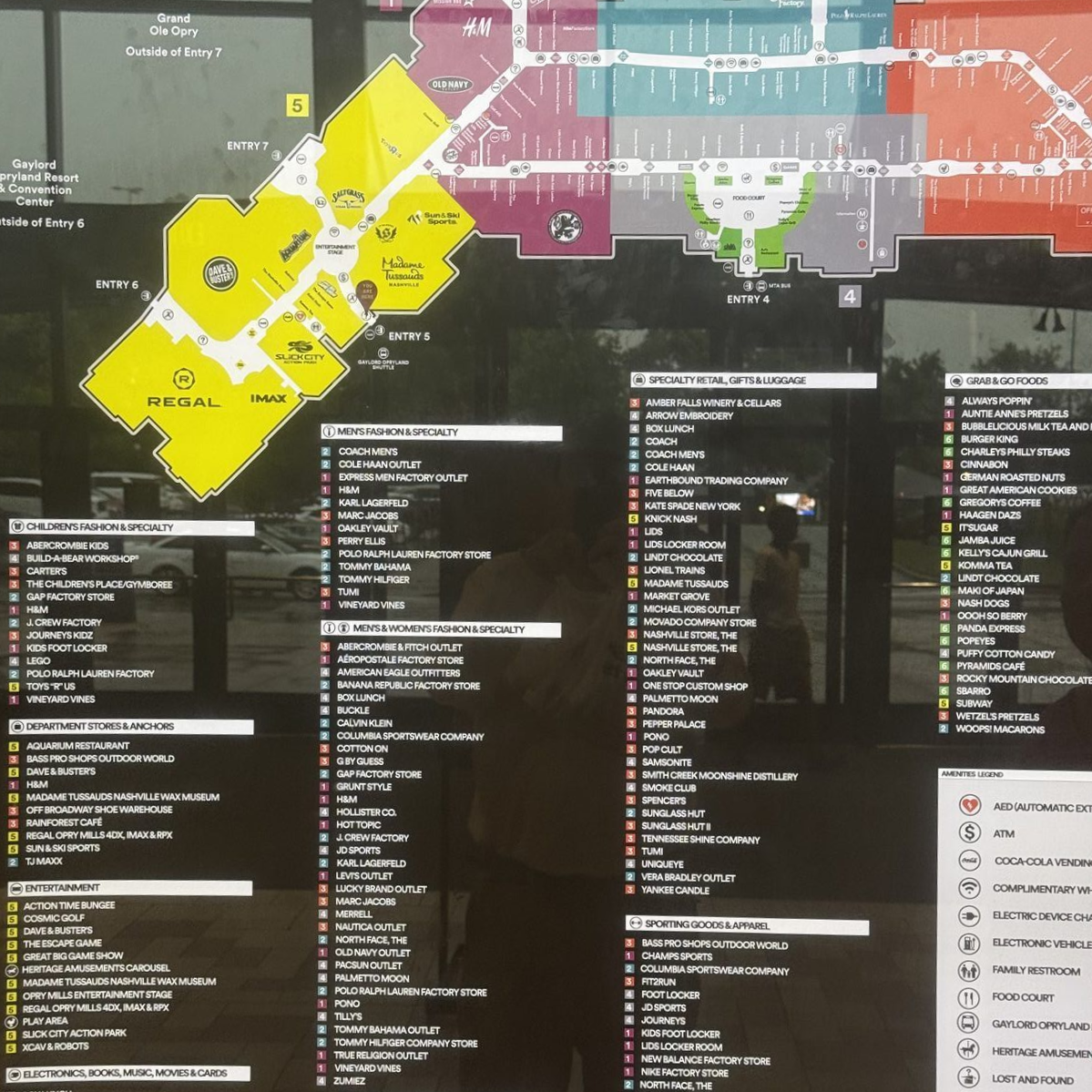
The next day we ducked into Opry Mills to escape the heat, and right inside the entrance was the answer to "how does Google Search work" printed on a six-foot panel.
A mall directory.
Every store in the building, listed and sorted: Men's Fashion here, Grab & Go there, each one tagged with a number and a color-coded zone. Nobody finds Bass Pro Shops by walking every hallway. You consult the map.
Googlebot Walks Every Aisle So You Don't Have To
Google's crawler is the employee who walks the entire mall, opens every door, and writes down what's inside. That's crawling. Then everything gets filed into categories with a location. That's the index. When you type a search, Google isn't scanning the live internet. It's reading the map it already built.
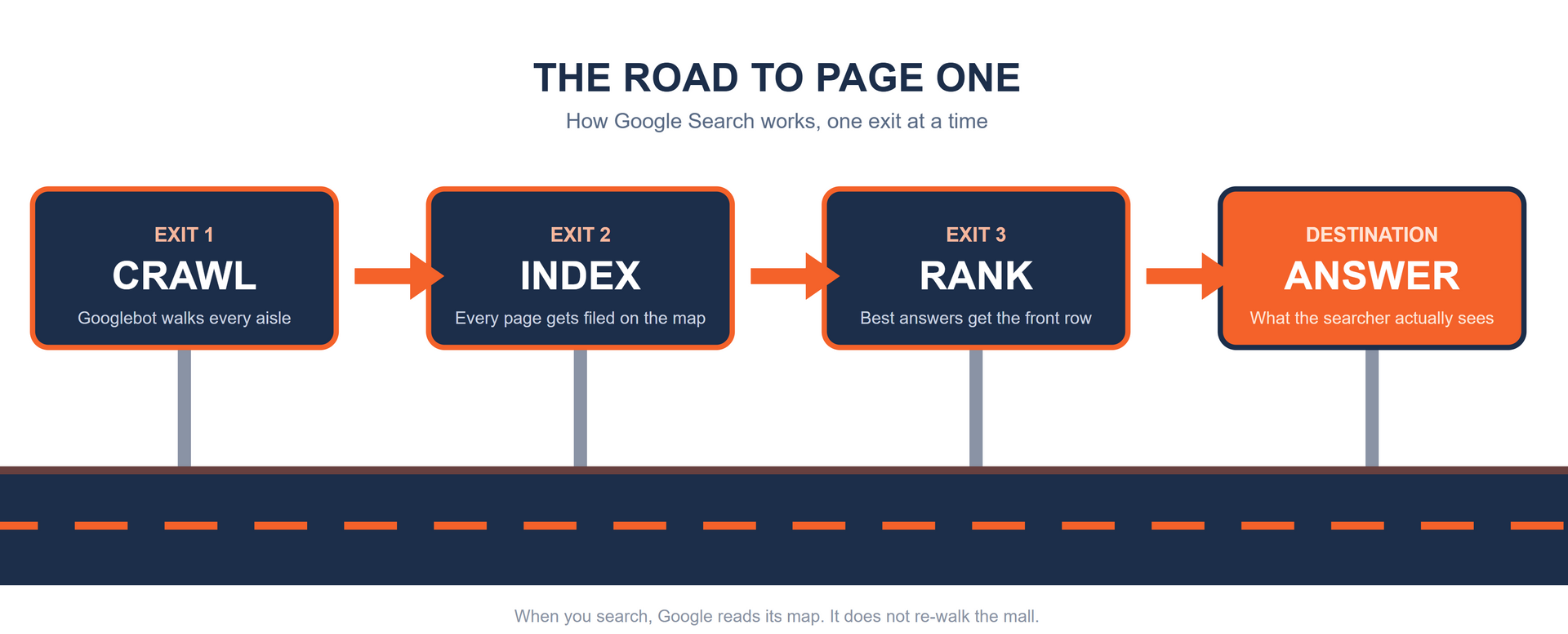
This is also the first place businesses quietly disappear. If your site blocks the crawler, loads too slowly, or hides its content behind scripts the crawler can't read, you're the store that never made it onto the directory. We audited a company last year whose previous agency had accidentally blocked crawlers entirely. Their traffic fell 87%. They weren't losing the ranking fight. They weren't on the map at all.
🧭 Pit Stop: Before you spend another dollar on content or ads, search site:yourdomain.com on Google and open Search Console's page indexing report. If pages you care about aren't indexed, nothing else you do matters yet. And in 2026, check your robots.txt for AI crawlers too — plenty of sites are blocking ChatGPT and Perplexity without knowing it.
The "You Are Here" Dot Is Half the Magic
The directory only works because it knows where you're standing. Google's version of the "You Are Here" dot is everything it knows about your context: your location, your device, your language, what you've searched before. It's why "best barbecue" gets you Nashville answers in Nashville and Dawsonville answers back home in Georgia. Same map, different dot.
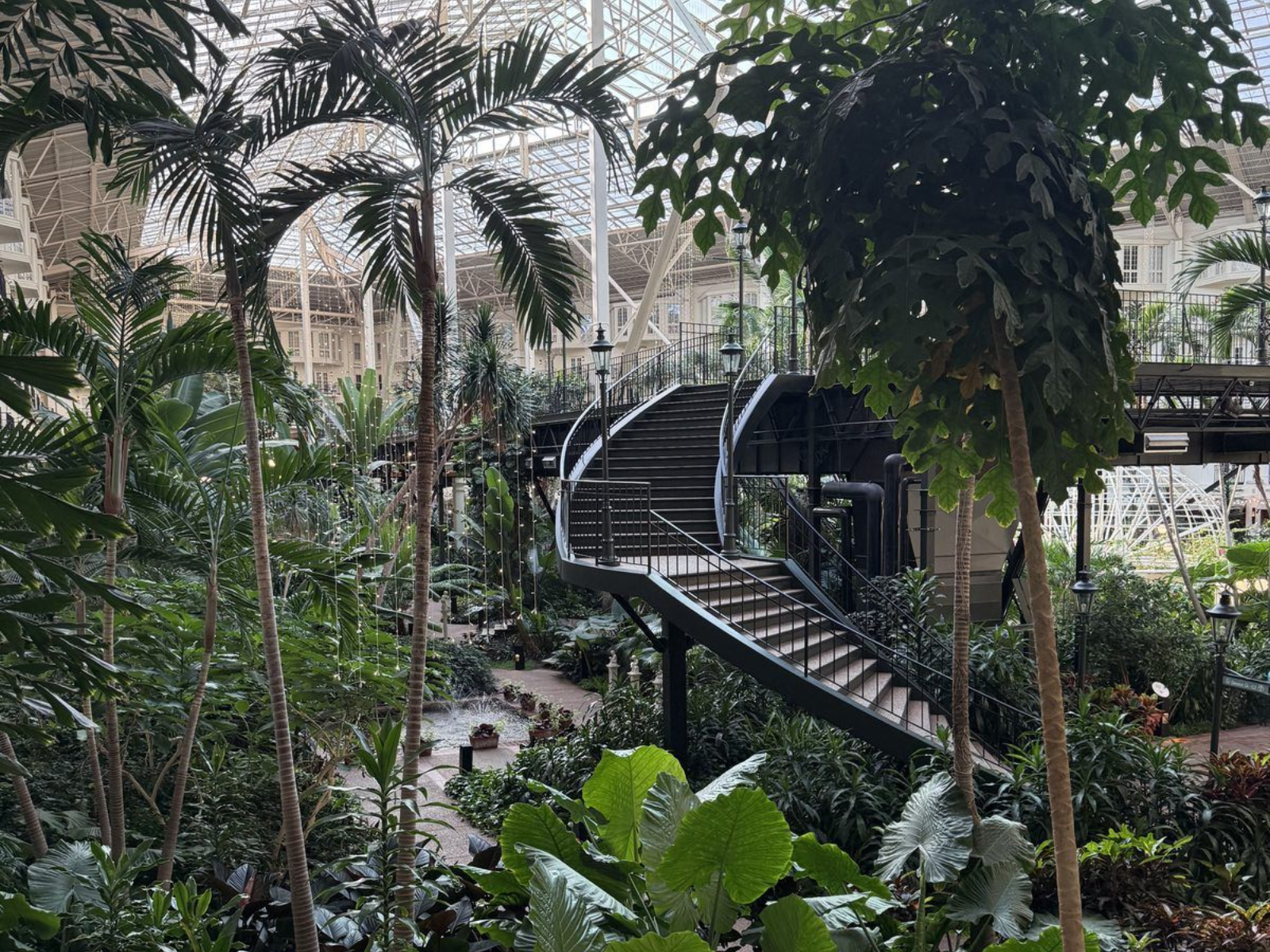
Nine acres of "natural" garden, every plant placed on purpose. Organic search results work the same way.]
One more thing from that day. The Gaylord Opryland atrium is nine acres of jungle under glass, and it feels wild and organic. It isn't. Every plant was chosen, placed, watered, and lit on a schedule. "Organic" search results are the same. They look like they just grew there. They're the most engineered thing you'll see all day.
The Loveless Cafe Rule: Reputation Gets You Chosen
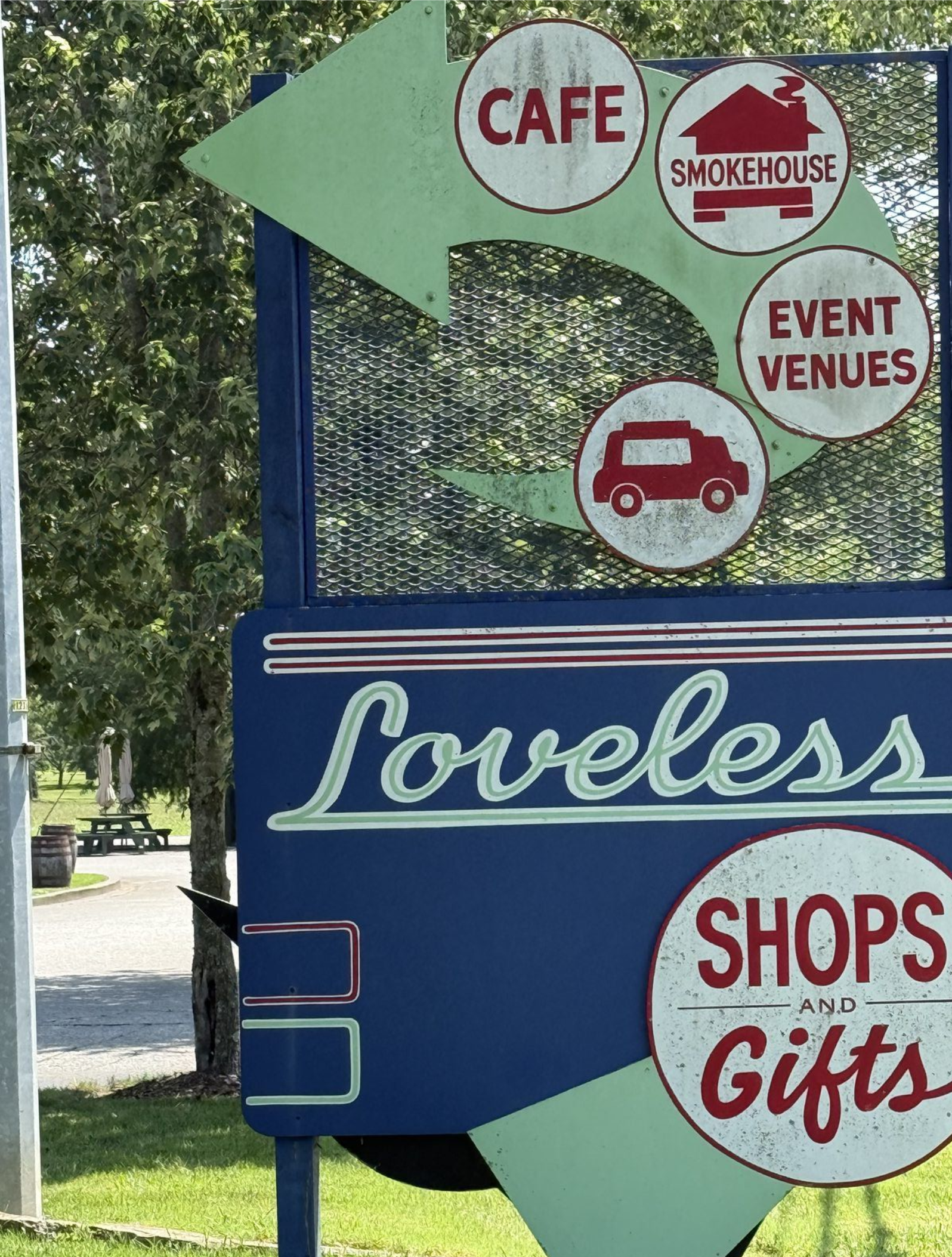
We drove twenty minutes out of town for biscuits at the Loveless Cafe. Want to know why? Not the sign. The hotel clerk told us to go. So did the tour guide. So did a stranger in line at a boot store. Three unconnected people pointed at the same place.
That's a backlink profile. When Google decides who ranks, it counts who points at you and, more importantly, who is doing the pointing. Three trusted locals beat fifty strangers handing out flyers. A mention from a respected industry site beats a hundred spammy directory links. The Loveless doesn't rank first in Nashville biscuit conversation because of its sign. It ranks because the whole city recommends it.
![Three Best of Georgia awards for ClickReady Marketing from 2023, 2024, and 2025]](https://irp.cdn-website.com/655a4350/dms3rep/multi/opt/05-best-of-georgia-plaques-1920w.png)
When I got back to the office, three plaques on my desk made the same point: Best of Georgia, three years running. Third-party validation is the digital version of the biscuit line out the door. Google's quality guidelines even have a name for this: E-E-A-T, which is experience, expertise, authoritativeness, and trust. Awards, reviews, press mentions, and real recommendations all feed it. You can't fake a line out the door.
How Do LLMs Work? Ask the Wax Figures

Madame Tussauds at Opry Mills is where this trip earns its keep, because a wax museum is the best explanation of how LLMs work that I've ever stumbled into.
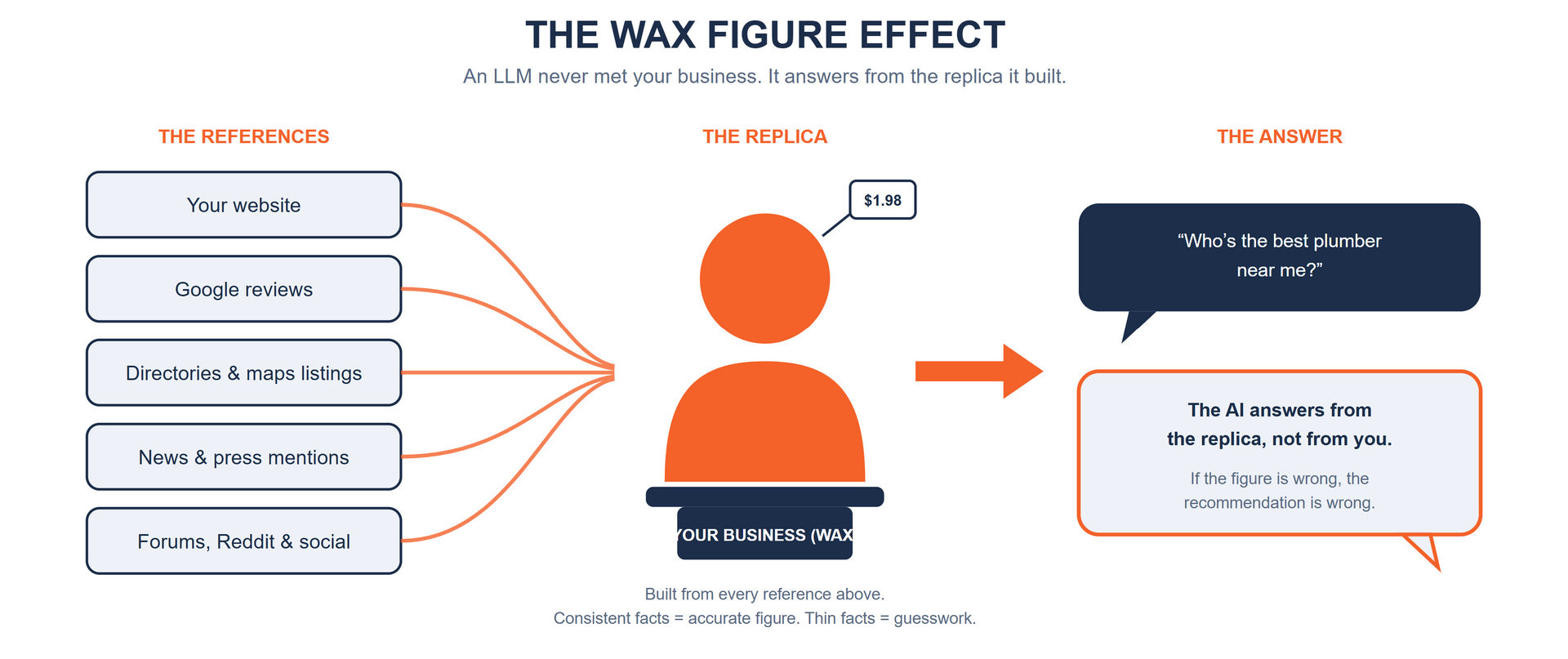
Look at the Minnie Pearl figure. The sculptors never met her. She passed away in 1996. They built her from thousands of references: photos, film, recordings, written descriptions. And they nailed the details, right down to the $1.98 price tag dangling from her hat, because that tag shows up in nearly every reference that exists of her.
That's exactly what ChatGPT, Claude, Gemini, and Perplexity have done with your business. They've never called you. They've never bought from you. They built a wax figure of your company out of every reference they could find: your website, your reviews, your directory listings, news mentions, Reddit threads. When a customer asks an AI "who's the best plumber near me," the AI doesn't go interview plumbers. It consults the figures in its museum.
When the Wax Slips
Here's the catch. Minnie Pearl's tag made it into wax because it appeared everywhere, consistently. When references are thin or contradictory, the sculptor guesses. In AI, that guess is called a hallucination, and it's how a chatbot ends up confidently telling customers you're closed on Saturdays, quoting a service you dropped in 2022, or blending your business with a competitor two towns over.
The fix is unglamorous and it works: make the facts about your business boringly consistent everywhere they appear. Same name, same services, same service area, same story, on your site, your Google Business Profile, your directories, and your press.
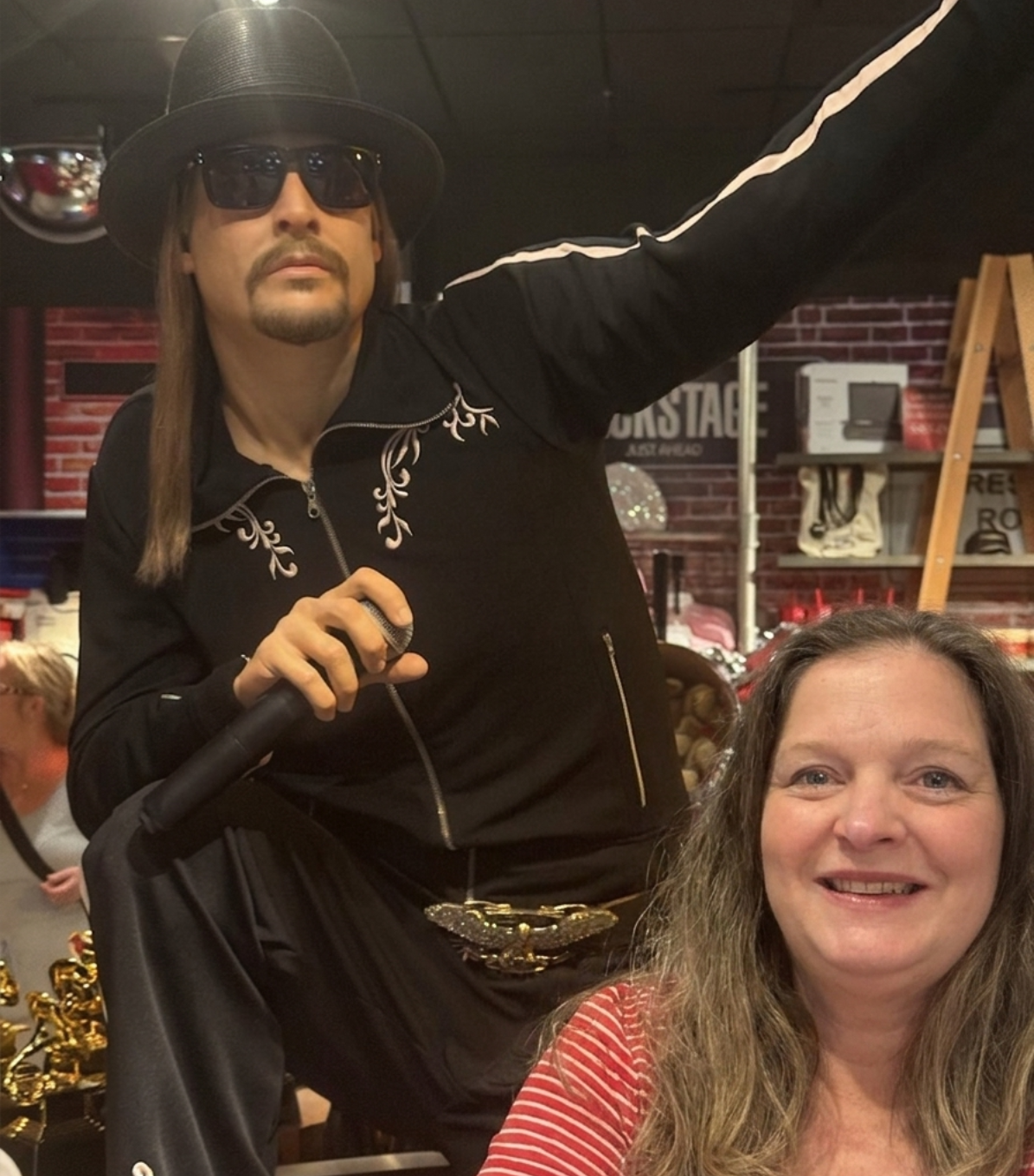
And don't tell yourself this is tomorrow's problem. Watch people at a wax museum. They pose, they grin, they treat the figure like the real guy. Your customers are doing the same thing with AI answers right now: asking, trusting, and calling whoever the replica recommends.
🕯️ Wax Museum Wisdom: Every major LLM already has a wax figure of your business on display. You didn't approve it, you can't unveil it, and customers are taking selfies with it today. The only question you control is whether the figure looks like you. Ask a few AI tools about your own company this week and read the answers like a mystery shopper.
The Gold Lantern: Structured Data Wins Specific Searches
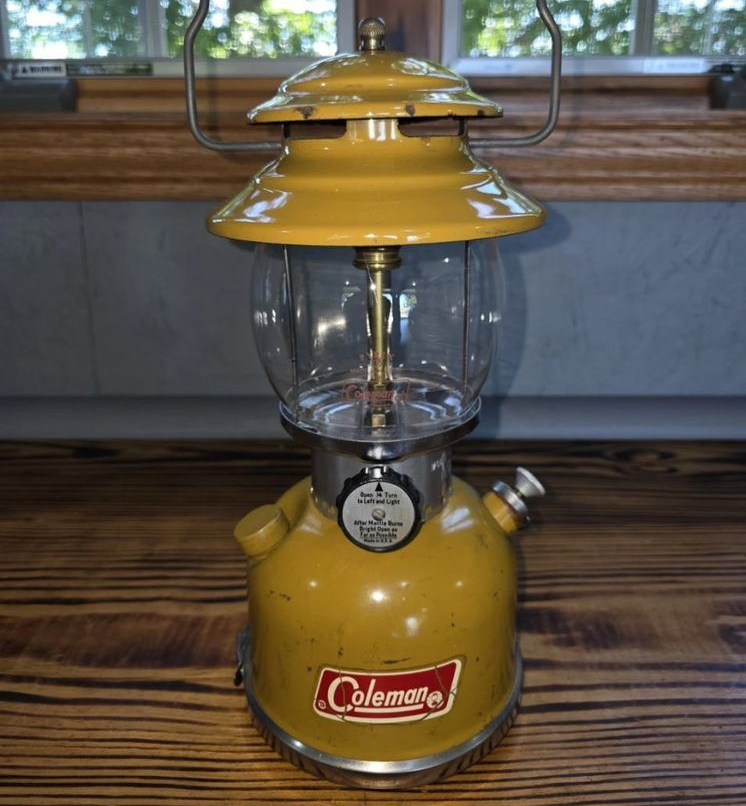
Somewhere on the ride home I was on eBay hunting a 1970s gold Coleman lantern. Notice what I didn't search: "lantern." I searched the brand, the color, the era, and eBay served up exactly the right listing, twelve photos deep.
That only works because the listing is structured. Brand, model, year, condition, price: every attribute lives in its own labeled field, so the search engine never has to guess. Schema markup does the same job for your website. It tells Google and AI tools, in machine-readable form, exactly what you do, where you work, what you charge, and what customers say about you.
This matters double in the AI era, because language models love content they can lift cleanly. Plain answers, labeled facts, and honest numbers get quoted. Vague brochure copy gets skipped. It's a big reason we publish our numbers openly on our SEO pricing plans page: pages that answer a specific question directly are the ones both Google and AI engines pull from.
Fireworks, a Heart-Eyed Truck, and the Drive Home

The fireworks over Nissan Stadium lasted about thirty minutes. The setup took months: permits, barges, crews, choreography synced to a live orchestra. The crowd only ever sees the thirty minutes.
Search works the same way. The AI Overview or featured snippet that appears in under a second sits on top of years of crawling, indexing, reputation building, and model training. You can't optimize the explosion. You can only optimize everything upstream of it. That's the whole discipline behind professional SEO services in 2026: generative engine optimization and classic SEO aren't separate projects, they're the same upstream work feeding two different shows. ClickReady Marketing has built its reputation across Georgia on exactly that upstream work, which is why service businesses turn to the team when AI answers start eating into their click traffic.
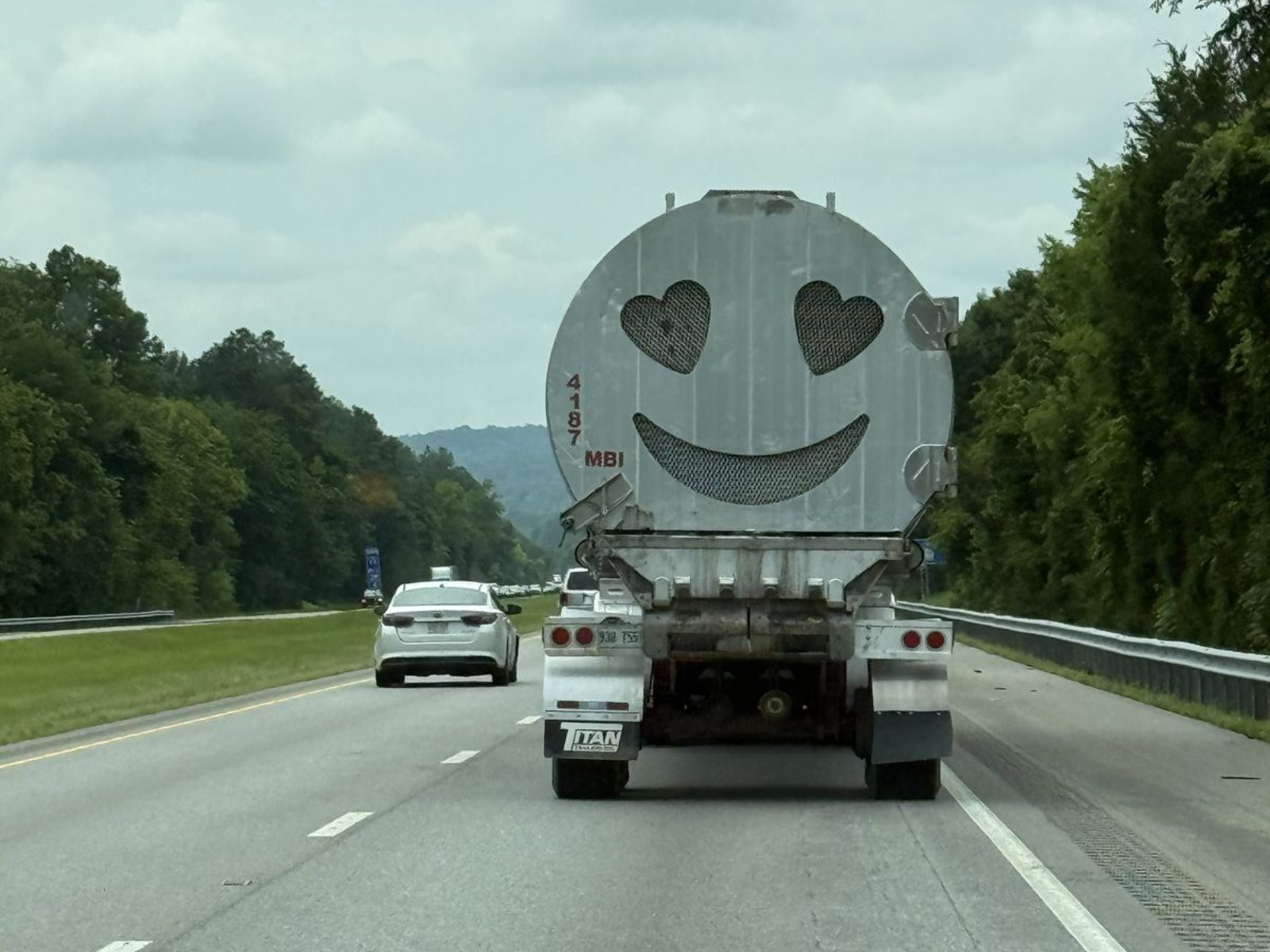
One last lesson found us on the interstate home. A plain steel tanker truck, except someone had cut a heart-eyed smiley face into the back panel. I photographed it. I showed people. It's now in this blog post being read by strangers. Nobody has ever photographed a plain tanker.
Distinctive beats generic, and being remembered is a ranking factor in disguise. Branded searches, mentions, and shares are exactly the signals that teach both Google and the wax-figure sculptors that you're an entity worth knowing. Be the truck people photograph.
Y'all Come Back Now
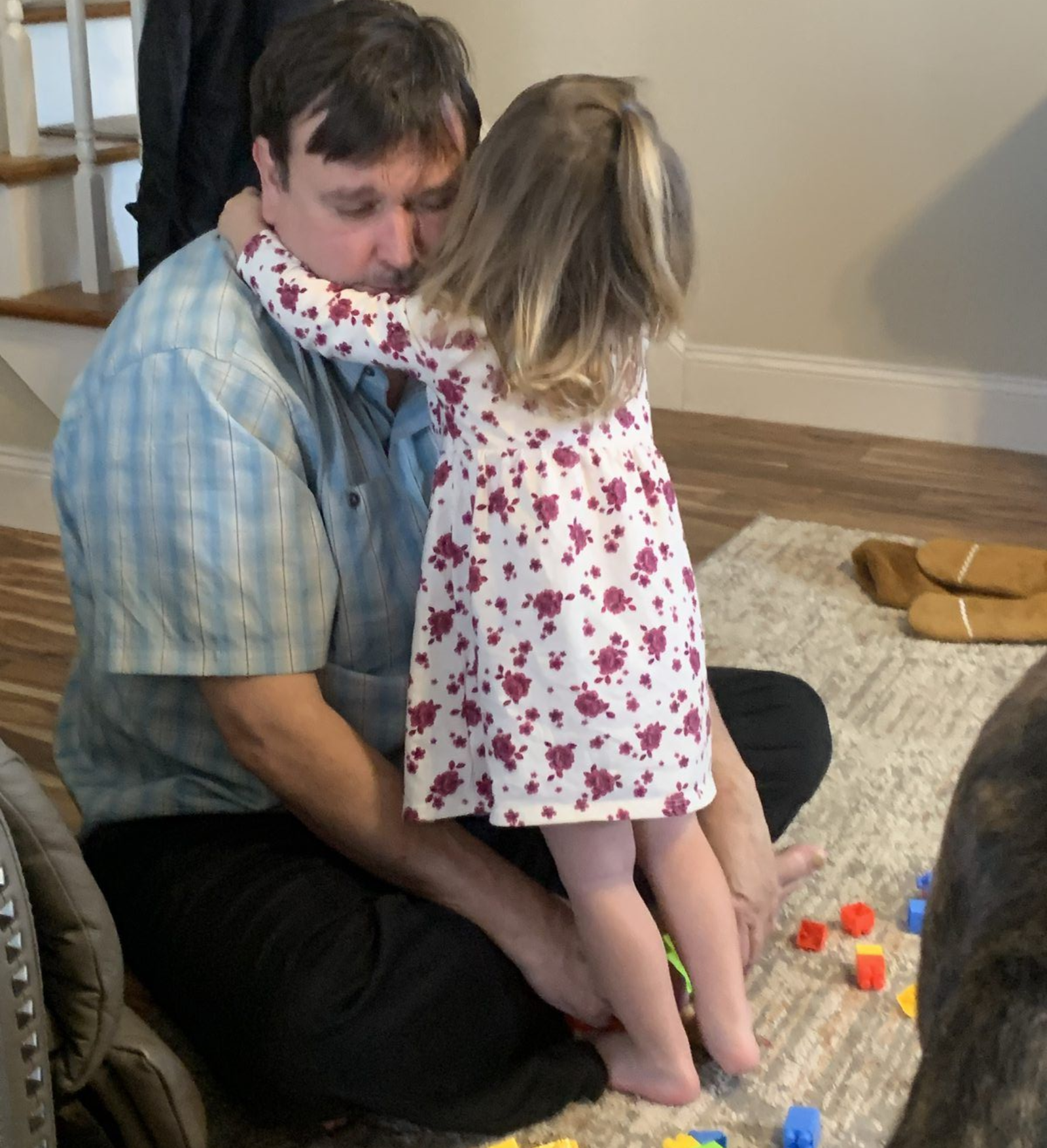
The last photo from that week isn't from Nashville. It's the hug when we got home. It's worth keeping in mind that every search, every AI answer, every map result ends the same way: a real person trying to find their way to a real business. The machinery in between is just Broadway, a mall map, a biscuit recommendation, and a wax museum.
If you'd like to know what the search engines and the wax sculptors currently believe about your business, ClickReady Marketing will show you, plainly. Reach out and we'll take a look together.
FAQs
What's the best way to optimize for how Google Search works today?
Get the fundamentals right, in order: make sure your site is crawlable and indexed, structure your pages so each one answers a specific question, mark up key facts with schema, and build genuine reputation signals like reviews, mentions, and links from trusted sources. Rankings follow businesses that make Google's job easy and the searcher's decision obvious.
Do AI tools like ChatGPT answer from training data or from live search results?
Both. The base model answers from its training data, the "wax figure" it built of your business, while most AI tools now also pull live web results and cite them. That's why you need consistent facts everywhere (for the figure) and quotable, well-structured pages (for the citations). One without the other leaves money on the table.
About the Author
Craig Lawson is the founder and CEO of ClickReady Marketing, an Atlanta-area SEO, PPC, and AI search optimization agency he launched in 2010 with co-founder Debbie. Before ClickReady, Craig spent years on the other side of the table, in B2B sales at G&K Services and JW Outfitters, running his own consulting firm, and building and selling two coffee shops and a retail business in North Georgia. That operator background shapes how he approaches marketing: leads and revenue over vanity metrics. Today ClickReady is a Google Premier Partner (top 3% of Google Partner agencies), a BBB A+ Accredited Business, and Georgia Business Journal's Best of Georgia digital marketing winner. Craig hosts ClickReady's Live SEO Sessions, where clients watch optimization work happen in real time.