
Should You Use Your Cell Phone as Your Business Number?
By Craig Lawson, Founder & CEO of ClickReady Marketing. Craig has led SEO and Google Ads campaigns for service businesses since 2010 and heads one of the top 3% of Google Partner agencies nationwide.
When you start a business, the fastest move is the obvious one: use the phone already in your pocket. No new bill, no setup, no waiting. Your personal cell becomes your business number, and for a while it works fine.
Then the spam starts. Then it grows. And one day you realize half your "leads" are robocalls, fake listing-verification scams, and people trying to sell you the same SEO package twice a week.
So should you use your cell phone as your business number? You can. But before you commit that number to your Google Business Profile, your website, and ten directories, you should know what it actually costs you down the road.
The Short Answer
Yes, you can run a business on your personal cell. Plenty of solo operators do, especially in the first year. There's nothing illegal or broken about it.
The catch is permanence. Once your personal number is published as your business line, you can't easily walk it back. It spreads across the web, gets copied into databases, and becomes the number customers, vendors, and spammers all have. Changing it later means updating every listing and risking lost calls. You're not just picking a number. You're marrying one.
Why Your Number Becomes a Spam Magnet
Here's the part most owners learn the hard way. Any phone number published on a public profile gets harvested. Automated tools scrape business names, addresses, and phone numbers straight off Google Business Profiles and directories, then feed them into dialing lists. It's cheap, it's constant, and your listing is a sitting target.
How the spammers find you
They don't guess your number. They copy it. A scraper pulls every business in a category and area, grabs whatever phone number is on the listing, and starts dialing. The more visible your profile, the more exposure your number gets.
Why a cell is the worst version of this
A landline or a managed business line gives you tools to fight back. A raw personal cell doesn't. You can't filter it the way a business phone system can. You can't rotate it if it gets buried in spam lists. And every junk call rings you directly, in the middle of a job, while a real customer gets your voicemail.
🔧 Two-Minute Gut Check: Open your phone's recent calls. Count how many of the last 20 were real customers versus robocalls, "listing verification," or sales pitches. If real callers are the minority, your number is already on the lists, and it won't get better on its own.
A Real Example: 22 Calls, Zero Customers
We work with a garage door company that had every call to its Google Business Profile routed so we could review them. Over a stretch of days, the listing generated 22 calls. The owner called every single one back to check.
All 22 were spam. Not one real customer. Twenty-two robodialers and solicitors, riding in on the number published on his profile. This is an established company with decades in business, not a brand-new shop that did something wrong. The number was simply exposed, and the dialers found it.
That's the trap. The spam volume has nothing to do with how good your business is. It tracks with how reachable your number is and how little you can do to screen it.

The Hidden Costs Beyond the Spam
Spam is the loud problem. There are quieter ones that cost you more.
You lose real leads. When your cell is buried in junk calls, you stop answering unknown numbers, and a paying customer slips through.
You can't measure anything. Calls to a personal cell tell you nothing. You don't know which ones came from Google, from ads, or from your website. You're flying blind on what's working, which turns getting more leads for your small business into a guessing game instead of a system.
You take on fraud risk. A personal mobile number tied to your business is a target for SIM-swap and number-porting scams, where a fraudster cons your carrier into moving your number to their device to intercept verification texts. That's a security exposure a separate business line doesn't put on your personal identity.
💡 Plain Truth: Once a number is scraped, it's on the lists for good. You can block individual callers all day and new ones replace them. The only durable fix is to stop exposing the number you actually answer.
The Better Setup: A Real Business Number
The smarter path is simple. Keep your personal cell private, and put a dedicated business number out front. You've got options at two levels.
Budget, do-it-yourself options
For a true solo operator testing the waters, self-serve apps work. Google Voice, Grasshopper, and Phone.com all give you a separate business number with basic call handling and their own spam controls, for very little money. Vonage and RingCentral sit a step up, with more features for small teams that are starting to scale.
Done-for-you, business-grade
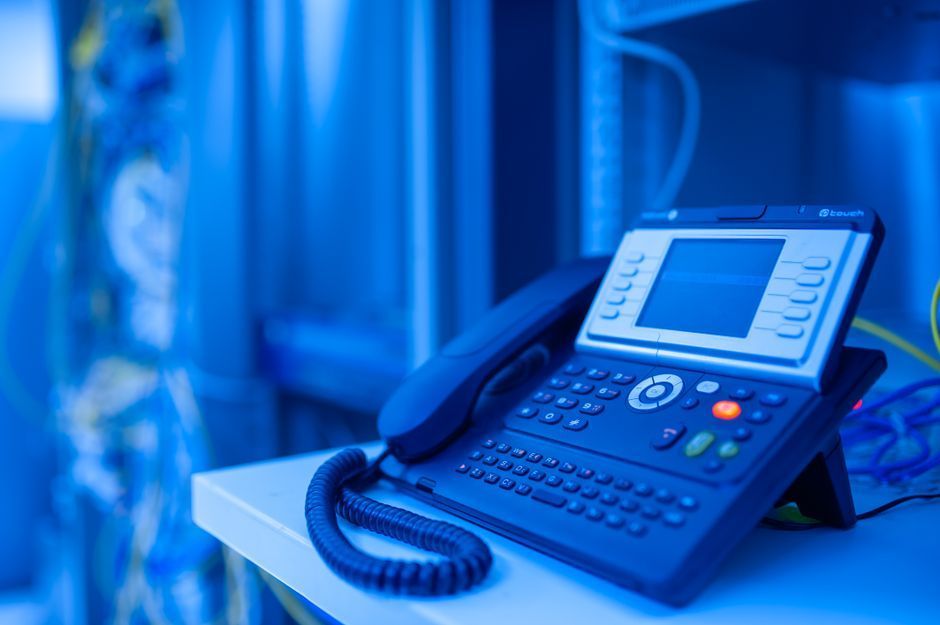
When phones actually matter to your revenue, you want a system that's set up right and supported, not one you wire up alone at midnight. Tie National builds business phone systems this way, with both on-premise and cloud or hosted options. As a leader in managed business phone systems, Tie National doesn't just sell you hardware and walk away. They test the system, train your staff so everyone's comfortable using it, and step in to work with your telecom provider when something breaks, even when the issue is outside their control. That hands-on support is the difference between a phone system and a phone headache.
Add a Layer That Filters the Junk
A business phone system gets your real number off the front line. The next layer decides which calls are worth your time.
That's where call tracking comes in. With the right setup, you can screen out the short junk calls automatically, see exactly which marketing channel each real call came from, and stop counting robocalls as leads. If you're not sure how it works, here's what call tracking is and whether you need it. As an industry leader in local marketing and lead tracking, ClickReady Marketing builds this layer for service businesses, pairing call tracking with the reporting that tells you what's actually driving the phone to ring.
Phone system and call tracking aren't competitors. They stack. One protects your number. The other proves your marketing works.
Give the Spammers a Busy Signal
Using your cell as your business number is fine until it isn't, and by the time the spam takes over, your number's already out there for good. Get your real number off the front line, put a proper system in its place, and add tracking so you only chase the calls that count.
Ready to stop answering robocalls and start measuring real leads? Call ClickReady Marketing at 404-923-0015 and we'll help you set it up the right way.
FAQs
What's the best business phone number setup to avoid spam calls?
The best business phone number setup keeps your personal cell private and puts a dedicated business line in front of it, then adds call tracking to screen the junk. A managed phone system handles the line itself, while tracking filters short spam calls and shows you which real calls came from which marketing source.
If my number is already getting spam, will switching numbers fix it?
Switching helps only if you stop exposing the number you actually answer. If you move to a fresh business line but publish your personal cell again, the scrapers find it again. The fix is structural: keep your real number private, publish a managed or tracked number, and filter incoming calls so spam never reaches you.
About the Author
Craig Lawson is the founder and CEO of ClickReady Marketing, an Atlanta-area SEO, PPC, and AI search optimization agency he launched in 2010 with co-founder Debbie. Before ClickReady, Craig spent years on the other side of the table, in B2B sales at G&K Services and JW Outfitters, running his own consulting firm, and building and selling two coffee shops and a retail business in North Georgia. That operator background shapes how he approaches marketing: leads and revenue over vanity metrics. Today ClickReady is a Google Premier Partner (top 3% of Google Partner agencies), a BBB A+ Accredited Business, and Georgia Business Journal's Best of Georgia digital marketing winner. Craig hosts ClickReady's Live SEO Sessions, where clients watch optimization work happen in real time.