
Fat Albert and the Cloud You Can't Photograph
By Craig Lawson, Founder & CEO of ClickReady Marketing. Craig has led SEO and Google Ads campaigns for service businesses since 2010 and heads one of the top 3% of Google Partner agencies nationwide.
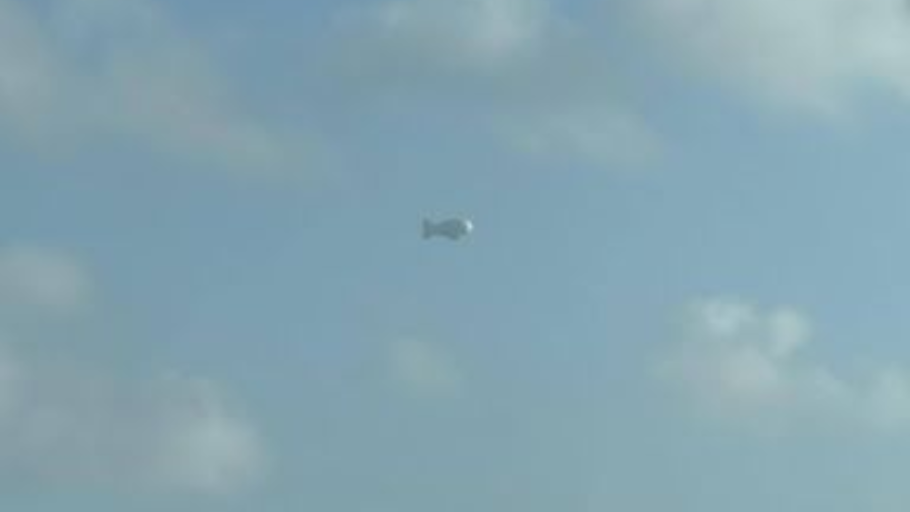
The first time you see it, you think it is a blimp that wandered off a golf tournament. Then it just hangs there. No parade. No logo you can read from the car. A white shape over the mangroves while the Overseas Highway keeps moving.
That is Fat Albert. Lower Sugarloaf Key, not Key West proper. Around mile marker 17 to 19. A tethered radar balloon with a job, and a nickname that stuck because "tethered aerostat" does not survive a conversation at the gas pump.
I take pictures of things like that. Clouds that look like they are standing up. A rainbow that drops onto a wet highway. Wet sand that turns into glitter when the sun hits it. A gray sky that has no edges. People who love looking up collect the same kind of roll. The photos feel like weather. They are also a decent way to talk about the other cloud. The one tech people often refer to in a way that confuses most of us.
A balloon with a cable
Fat Albert looks free. It is not. There is a site at the end of Blimp Road. There is a crew. There is a cable. When the weather gets ugly they reel it in, and locals notice the empty sky the way you notice a missing water tower.
The useful part is not the balloon. The useful part is what it holds and who is reading the signals on the ground.
That split is the digital-cloud problem in one object. We named the visible thing and forgot the building.
The habit of looking up
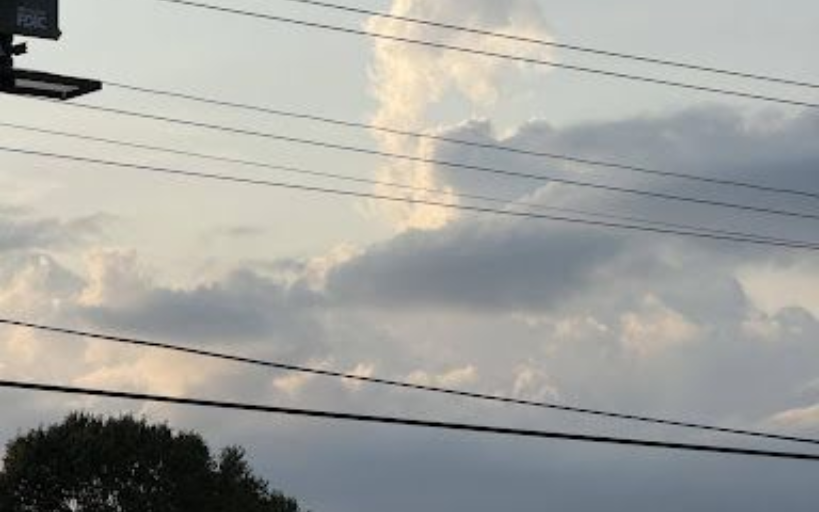
One afternoon the sky grows a column that looks like a person. Late light hits one side. You shoot it through the wires because the wires are in the way and you are not getting a cleaner angle.
Another day there is almost nothing up there except one small puff with a faint trail underneath. It looks like rain. Most of it never hits the ground.
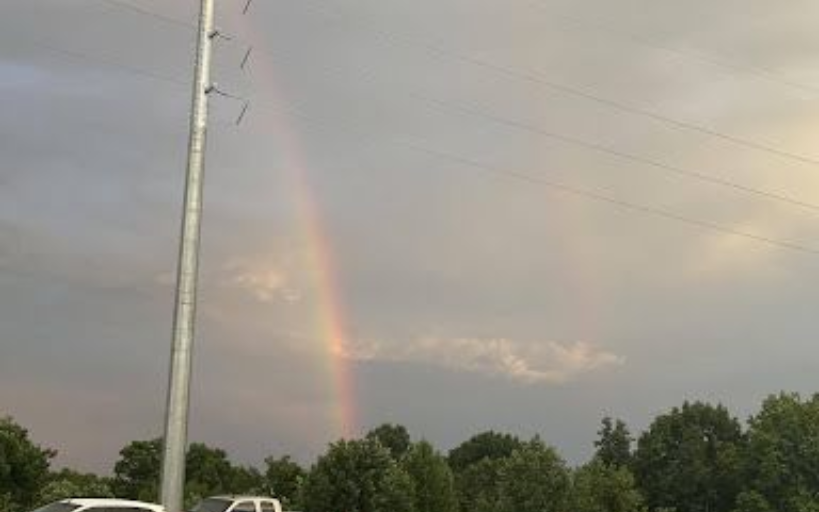
Then there is the highway rainbow. Cars on the shoulder. Pavement still dark. The color only works from that stretch of road, with sun and leftover rain in the same hour.
None of those pictures are mysterious once you name them. Towering cumulus. Virga. A double rainbow. They earn a stop because of the shape. The gray water shot does not. Same camera. Same habit. Nothing to point at.
Online visibility works like that. Almost nobody says it that plainly.
What they mean when they say "the cloud"
They do not mean weather.
They mean your website, your email, your backups, and a lot of the tools that answer customer questions are sitting on computers you do not own. Someone else's building. Someone else's power bill. You get there with a password.
It is the spare-key arrangement. You stop carrying every file on the machine in the back office. You did not move the shop into the sky.
Google's version of that building holds a catalog. Software copies public pages, files them, and tries to hand a stranger the best match. ChatGPT-style tools work differently. They spent a long time reading public text and practicing what usually comes next. When you ask a question, you get a forecast built from those patterns. Sometimes the tool also glances at live search. The glance is new. The stored patterns are not.
If you have already read our piece on how AI mentions get distilled, this is the same idea with a different view out the windshield.
Cable Note
Fat Albert stays on station because something you cannot see from the highway is holding it. Your cloud presence works the same way. Pages, photos, hours, and reviews have to exist in public or there is nothing to hold.
The sand is the honest picture
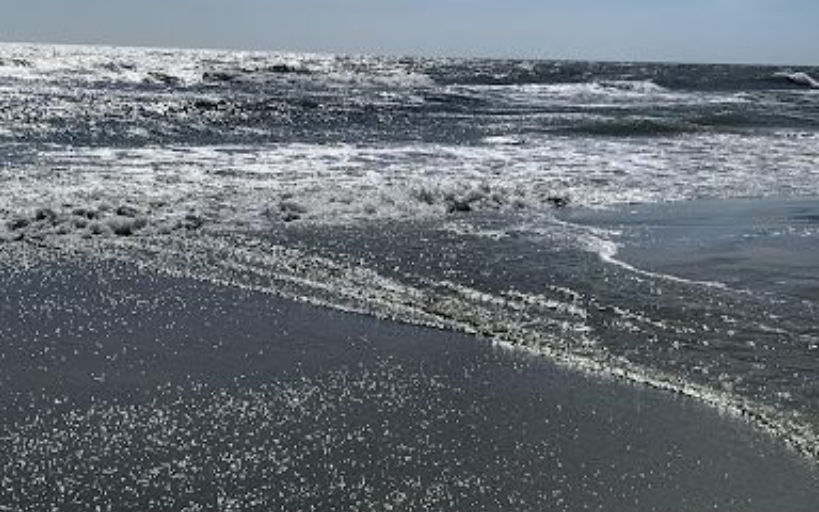
The beach photo is the one that surprised me after I sat with it. Not the wave. The wet sand. Thousands of little hits of light. No single sparkle is the story. The surface is.
That is closer to how Google and the chat tools see a local shop than any paragraph that starts with "we provide." They add up small public traces. A service page that names the town. A Google photo of the actual truck. A review that says what got fixed. An address that matches the door. A picture from the deck on a slow Tuesday.
A photo that never leaves the phone is a sky you looked at. A photo that lands on the site, with one true sentence under it, is a sparkle on the sand.
Generic pages are the overcast water. You can tell it is a sky. You would not pull over.
A shop owner on the shoulder
Picture a plumber who already knows the work. He has the truck. He has the reviews in his head. He has a camera roll full of jobs he is proud of. His website still sounds like it could swap logos with the next three shops on the highway.
Google can file that page. It just cannot tell it apart. An AI tool asked "who should I call" will lean on whatever public pattern is strongest. If the strongest pattern is bland, the answer will be bland. Or it will name somebody else.
ClickReady Marketing spends its days on that gap for service businesses that cannot afford to be invisible. The work is not poetry. It is making the public trail match the shop a neighbor would recognize.
If you want the search-side version of one question becoming many, that walkthrough is query fan-out, explained with fans.
Shoulder Rule
Before you publish a page, ask whether a stranger would photograph it. If the answer is no, add two sentences only you could write. Street. Job. What went wrong. What you did. Then publish.
What the roll is for
You do not need a theory of data centers. You need a short list that leaves the phone.
- Put up one page that talks the way you talk at the counter.
- Add three photos that could not be rented.
- Update the Google profile with a picture that matches the caption.
- Write the answer to the question people already ask you twice a week.
Leave it public. Catalogs and models cannot use a draft.
When you want that turned into a site plan you can watch happen, generative engine optimization is the program, and the contact page is the next step. Ask for the complimentary audit if you want a straight look at what the systems can currently see.
Same Sky, With a Rainbow
Rainbows are easy because you can point them out. The digital cloud is hard because the building never sits over the water like that. The sky photos help anyway. They train the same muscle: stop for a shape, skip the smear.
Google files what you publish. The chat tools remember patterns in what got published. Your camera roll is full of proof. The highway only counts the frames you put where a stranger can see them. Plus, everyone likes rainbows and the mythical pot of gold.
FAQs
What is the best way to explain what the cloud means for small business?
Your site, mail, backups, and a lot of AI tools run that way. Customers never visit the building. They only meet the pages, photos, and listings you publish or make public.
Why use Fat Albert to talk about Google and ChatGPT?
Because it is a thing in the actual sky that collects information while the real work happens on the ground. That split is the one owners miss. The nickname floats. The cable does not.
About the Author
Craig Lawson is the founder and CEO of ClickReady Marketing, an Atlanta-area SEO, PPC, and AI search optimization agency he launched in 2010 with co-founder Debbie. Before ClickReady, Craig spent years on the other side of the table, in B2B sales at G&K Services and JW Outfitters, running his own consulting firm, and building and selling two coffee shops and a retail business in North Georgia. That operator background shapes how he approaches marketing: leads and revenue over vanity metrics. Today ClickReady is a Google Premier Partner (top 3% of Google Partner agencies), a BBB A+ Accredited Business, and Georgia Business Journal's Best of Georgia digital marketing winner. Craig hosts ClickReady's Live SEO Sessions, where clients watch optimization work happen in real time.