Guerrilla Marketing Lessons From the Empire State Stunt
By Craig Lawson, Founder & CEO of ClickReady Marketing. Craig has led SEO and Google Ads campaigns for service businesses since 2010 and heads one of the top 3% of Google Partner agencies nationwide.
On July 1, two daredevil climbers scaled the Empire State Building's spire, unfurled a banner, and staged a marriage proposal 1,400 feet above Manhattan. The video went everywhere within hours. It's the kind of attention most brands would pay millions for, and the couple got it for the price of a subway ride and a hidden overnight stay on the 102nd floor. It's also a masterclass in guerrilla marketing, just not the lesson you'd expect. Because two days later, they walked out of Manhattan Criminal Court facing felony burglary and reckless endangerment charges. The hidden story here isn't the climb. It's what attention actually costs, and why most small businesses are chasing the wrong version of it.
1. What Actually Happened (and Why Marketers Should Care)
The two climbers are professional daredevils with a global social following built on exactly this kind of stunt. According to investigators, they entered the building with regular tickets, hid overnight, slipped through a hatch at 5 a.m., and loosened the brackets on a locked security door to reach the broadcast antenna. The NYPD couldn't even approach them right away. The antenna emits radio signals strong enough to harm the human body, so first responders had to wait 30 minutes for it to power down.
Strip away the drama and you're looking at a textbook attention play: a dramatic visual, an emotional hook (the proposal), a message banner, and pre-planned social content posted before the handcuffs came out. Every element was engineered for shares. That's guerrilla marketing in its purest form, using surprise and spectacle instead of ad budget to earn attention.
And it worked. Millions of views, international press, their names in every headline. So why shouldn't your business take notes?

2. The Attention Math Behind Guerrilla Marketing
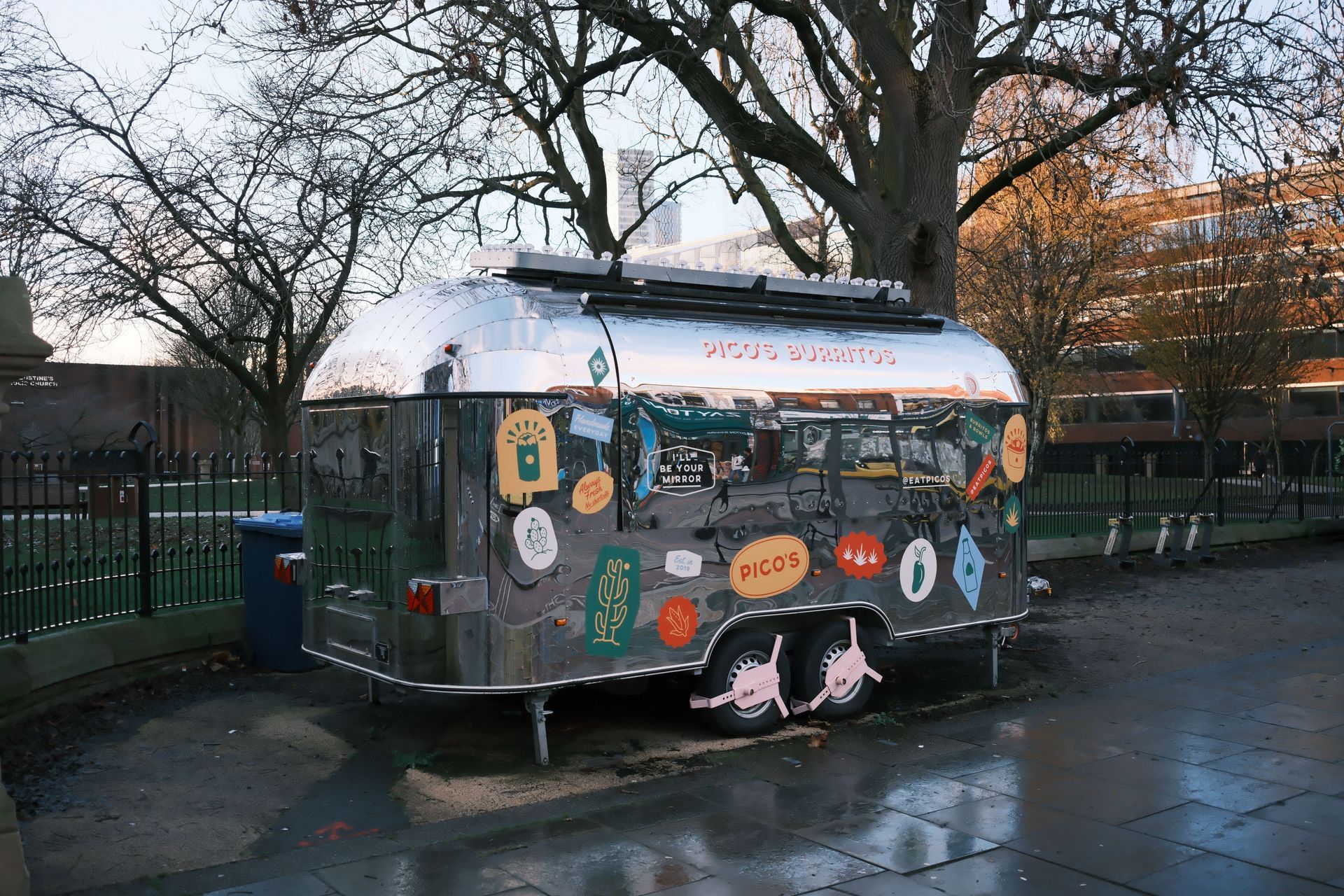
Guerrilla marketing exists because attention is the scarcest resource in modern business. The average person scrolls past thousands of messages a day, and a clever stunt cuts through all of it at once. That's the appeal. A food truck wrapped like a giant taco outearns a billboard. A gym that hands out donuts with a cheeky note gets talked about for weeks.
Why Stunts Spread
Stunts spread because they trigger the two things people can't resist sharing: surprise and emotion. The Empire State climb had both baked in. Nobody shares a competent Google ad with their group chat. Everybody shares a proposal on top of a skyscraper.
Why Stunts Stall
Here's the part the highlight reels skip: attention without a destination goes nowhere. The climbers had a destination, since their entire business is their following. Your plumbing company doesn't work that way. If a viral moment sends 50,000 people looking for you and they find a thin website, no reviews, and a phone that rings out, the moment evaporates. Attention is a spike. Revenue comes from what catches the spike.
🗽 Plain Truth: The climbers didn't go viral because they were reckless. They went viral because they understood story structure: a visual hook, rising tension, and an emotional payoff. You can steal the structure without stealing the risk. A before-and-after driveway transformation follows the exact same arc as a skyscraper climb, minus the felony charges.
3. The Hidden Costs Nobody Puts in the Case Study
The couple now faces multiple felonies, an August court date, and their attorney says deportation is a real concern. That's the extreme end, but every attention-first play carries a version of this bill. Stunts that misfire can damage a brand faster than they built it. A prank that reads as tone-deaf, a giveaway that gets swamped, a spicy social post that alienates half your customer base. Small businesses rarely have the reputation cushion to absorb a miss.
There's a quieter cost too: opportunity. Every hour spent scheming a viral moment is an hour not spent on the unglamorous work that compounds, like your Google Business Profile, your reviews, your service pages, your follow-up on missed calls. We've audited accounts where a business was missing 8 out of 10 inbound phone calls. No stunt on earth fixes that. It just sends more calls to voicemail.
4. Guerrilla Marketing Examples That Don't Require a Lawyer
The good news: the underlying playbook is completely legal when you scale it down. Some guerrilla marketing examples that work for local businesses:
- Newsjacking done right. Tie your expertise to a story people are already following. A locksmith could publish "How two climbers defeated a commercial-grade lock, and what it means for your building" within 24 hours of this exact story. That's earned relevance, not trespassing.
- Physical surprise in your own territory. Sidewalk chalk art outside your shop, a wrapped work truck that makes people do a double take, an over-the-top holiday display. Legal, cheap, photographable.
- Generosity stunts. Pay for the next 20 coffees at the shop near your office with a branded card. People post that unprompted.
- Community takeovers. Sponsor something unexpected, like the little league team's walk-up songs or the world's most dramatic ribbon cutting. Local press loves a weird angle.
Notice what these share with the skyscraper climb: surprise, a visual, an emotional beat. Notice what they don't share: broken locks and arraignment hearings.
5. Build the Net Before You Chase the Spike
If you're reading this, you've probably had at least one moment where a post unexpectedly took off, and then nothing came of it. That's the net problem. Before any attention play, make sure the catch systems exist: a fast website with clear service pages, a Google Business Profile that's complete and reviewed, call tracking so you know what the moment actually produced, and a same-day follow-up habit for every lead. As an industry leader in digital marketing for small businesses, ClickReady Marketing builds exactly this foundation for its clients first, because a viral spike landing on a broken funnel is just expensive applause.
This is also where the playing field has genuinely shifted. The tools that turn attention into customers used to be enterprise-only. Now they're accessible to any local business, a shift we broke down in our post on digital marketing as the great equalizer for small businesses.
📈 Try This Week: Run the "spike test" on your own business. Google your company name in an incognito window, call your own main line after hours, and submit your own contact form. If a stranger did those three things after seeing you go viral tonight, what would happen? Fix whatever made you wince.
6. Attention Is a Tactic. Trust Is the Strategy.
The climbers converted years of stunts into fame because fame is their product. For a service business, the product is trust, and trust builds through repetition: showing up in search when someone has a burst pipe, answering the phone, having 200 reviews that say you did what you promised. Guerrilla marketing earns you the first look. Everything after that is won by the boring fundamentals, done consistently, month after month. The businesses that grow aren't the loudest ones. They're the ones that are findable, credible, and responsive at the exact moment a customer is ready.
Don't Climb the Spire. Climb the Rankings.
The Empire State stunt proves attention can be taken by force, and that the bill comes due fast. Your business doesn't need a skyscraper. It needs surprise-driven creativity pointed at a funnel that actually converts. If you want a marketing plan with all of the spark and none of the court dates, see how ClickReady works with businesses like yours and let's build something that climbs steadily instead.
FAQs
What's the best guerrilla marketing approach for a small business?
The best guerrilla marketing combines a surprising, photographable moment with a working conversion path. Start small and local: a wrapped vehicle, a generosity stunt, or a newsjacking post tied to a trending story in your industry. Then make sure your website, Google Business Profile, and phone handling can catch the attention it creates.
Is newsjacking risky for a local business?
Newsjacking is low-risk when you stick to two rules: move within 24 to 48 hours while the story is hot, and only comment where you have real expertise. Avoid tragedies and divisive politics. A roofer weighing in on hail-storm coverage is helpful; a roofer weighing in on a celebrity scandal is noise.
About the Author
Craig Lawson is the founder and CEO of ClickReady Marketing, an Atlanta-area SEO, PPC, and AI search optimization agency he launched in 2010 with co-founder Debbie. Before ClickReady, Craig spent years on the other side of the table, in B2B sales at G&K Services and JW Outfitters, running his own consulting firm, and building and selling two coffee shops and a retail business in North Georgia. That operator background shapes how he approaches marketing: leads and revenue over vanity metrics. Today ClickReady is a Google Premier Partner (top 3% of Google Partner agencies), a BBB A+ Accredited Business, and Georgia Business Journal's Best of Georgia digital marketing winner. Craig hosts ClickReady's Live SEO Sessions, where clients watch optimization work happen in real time.